
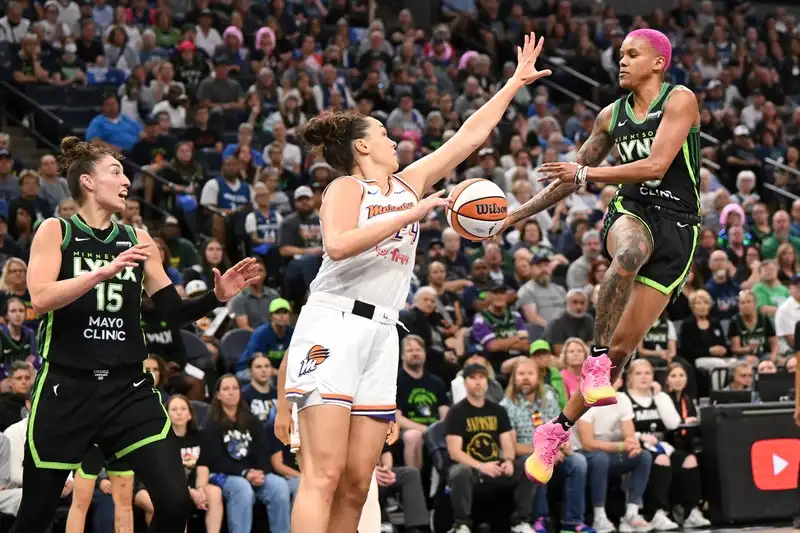
The June 1 matchup between the Minnesota Lynx and Phoenix Mercury was one of those early-season WNBA games that quietly builds intensity quarter by quarter until it feels like a playoff preview. Broadcast on the official WNBA live stream, the game delivered everything fans expect from two teams trying to establish rhythm in a long season—defensive pressure, shifting momentum, physical rebounds, and stretches where neither side was willing to give an inch.
The Minnesota Lynx and Phoenix Mercury have developed a competitive recent history, and this meeting added another chapter to that growing rivalry. While the box score tells part of the story, the real narrative came from how each team tried to impose its identity over forty minutes of basketball.
A Game Defined by Contrasting Styles
From the opening possession, the difference in approach was clear.
The Minnesota Lynx played with structure and discipline. Their offensive sets were deliberate, often built through multiple passes before a shot attempt. They prioritized spacing, ball movement, and controlling tempo. Defensively, they focused on positioning, forcing Phoenix into longer possessions and contested looks.
The Phoenix Mercury, on the other hand, leaned heavily into pace. They looked most comfortable when pushing in transition or attacking early in the shot clock. Their offense had moments of fluidity and explosiveness, especially when perimeter shots began to fall, but consistency remained the challenge.
That contrast—Minnesota’s control versus Phoenix’s speed—shaped the entire flow of the game.
First Quarter: Feeling Out the Fight
The opening quarter never truly belonged to one team. Instead, it functioned as a measurement period, where both sides tested defensive matchups and offensive timing.
Minnesota tried to establish early rhythm through half-court execution, working the ball inside and looking for high-percentage shots rather than forcing perimeter attempts. Phoenix countered by pushing tempo whenever possible, trying to disrupt Minnesota’s defensive setup before it could fully organize.
What stood out most was the physicality. Even early in the game, rebounds were contested aggressively, and drives to the basket were met with contact that set the tone for the rest of the night.
Neither team gained clear separation, but both made their intentions obvious: this was not going to be an easy game on either side.
Second Quarter: Momentum Starts to Shift
As the game moved into the second quarter, the bench units became increasingly important.
Minnesota found valuable minutes from its rotation players, especially on defense. Their ability to stay disciplined while forcing Phoenix into tougher shots helped stabilize stretches where the offense wasn’t flowing smoothly.
Phoenix responded with improved spacing and more purposeful ball movement. Instead of relying only on transition opportunities, they began to explore mid-range scoring and off-ball actions that created cleaner looks.
The second quarter became a back-and-forth exchange of small runs rather than one dominant stretch. Every time Minnesota seemed ready to pull ahead, Phoenix responded quickly. The same was true in reverse.
By halftime, the game remained tightly balanced, reflecting just how evenly matched the teams were in execution, even if their styles were completely different.
Third Quarter: The Turning Point in Execution
The third quarter is where the game began to take shape.
Minnesota came out of the locker room with noticeably sharper defensive focus. Rotations were quicker, help defense was more aggressive, and Phoenix found fewer uncontested looks compared to the first half.
On the boards, Minnesota began to assert control. Defensive rebounds became a key factor, limiting Phoenix’s ability to extend possessions or generate second-chance points. That control over possessions gradually tilted momentum in Minnesota’s favor.
Phoenix still found ways to respond, especially through transition opportunities and individual scoring bursts, but the rhythm was no longer fully in their control. Every possession became more difficult, more contested, and more physically demanding.
This was the point where Minnesota’s structure began to matter most.
Fourth Quarter: Pressure Basketball and Late-Game Composure
The final quarter brought the most intense basketball of the night.
Both teams slowed down offensively, understanding that every possession carried weight. Minnesota leaned into patience, refusing to rush shots and instead working through their sets to find higher-percentage looks. Their decision-making stood out, especially in late-clock situations.
Phoenix attempted to inject urgency into the game, pushing for quick scoring opportunities and trying to spark momentum shifts through perimeter shots and aggressive drives. At times, it worked. At other moments, it led to rushed possessions that Minnesota was able to defend or convert into stops.
The difference in the closing minutes came down to composure. Minnesota looked more settled under pressure, executing possessions with clarity and control. Phoenix continued to fight, but the margin for error in a close game like this is extremely thin.
It was the kind of fourth quarter that highlights why execution often matters more than talent alone.
Key Themes That Defined the Game
Beyond the scoreboard, several themes shaped how the game unfolded.
Rebounding was a major factor throughout the night, with Minnesota consistently limiting Phoenix’s second-chance opportunities. That single advantage forced Phoenix into more half-court offense, where Minnesota was most comfortable defensively.
Turnovers also played a subtle but important role. While neither team was perfect, Minnesota managed to avoid the kind of late-game mistakes that can swing close contests.
Tempo control ultimately became the deciding factor. Phoenix thrived when pushing pace, but Minnesota succeeded in slowing the game into structured half-court possessions.
Where the Season Perspective Shifts
For Minnesota, this game reinforced their identity as a disciplined, defense-first team capable of winning close, physical contests. These are the kinds of games that build long-term confidence and playoff readiness.
For Phoenix, the takeaway is more complex. The offensive potential is clearly present, especially in transition and perimeter shooting stretches. However, sustaining that efficiency in slower, more structured possessions remains an area for growth.
Both teams showed enough in this matchup to suggest they will remain competitive throughout the season, but they are clearly building toward different versions of success.
A Lifestyle and Recovery Angle Beyond the Game
Interestingly, games like this also highlight how modern athletes and fans alike are increasingly focused on mental balance and recovery, not just physical performance. In today’s sports culture, performance is tied closely to mindset, stress management, and emotional wellness.
For readers interested in exploring that side of performance and well-being, you can find curated wellness-focused products here: Ragers Mental Health
The connection between mental clarity and athletic performance is becoming more widely recognized, especially in high-pressure leagues like the WNBA where consistency often comes down to focus as much as physical ability.
Final Thoughts
The June 1 WNBA showdown between the Minnesota Lynx and Phoenix Mercury was not defined by a single highlight or turning point, but by a steady accumulation of small advantages that shaped the final outcome.
Minnesota’s discipline, rebounding control, and late-game execution ultimately separated them from a Phoenix team that showed flashes of brilliance but struggled to maintain consistency across all four quarters.
For fans watching the stream or catching the highlights afterward, this game delivered exactly what makes the WNBA compelling: intensity, adjustment, and competition that stays alive until the final possession.