
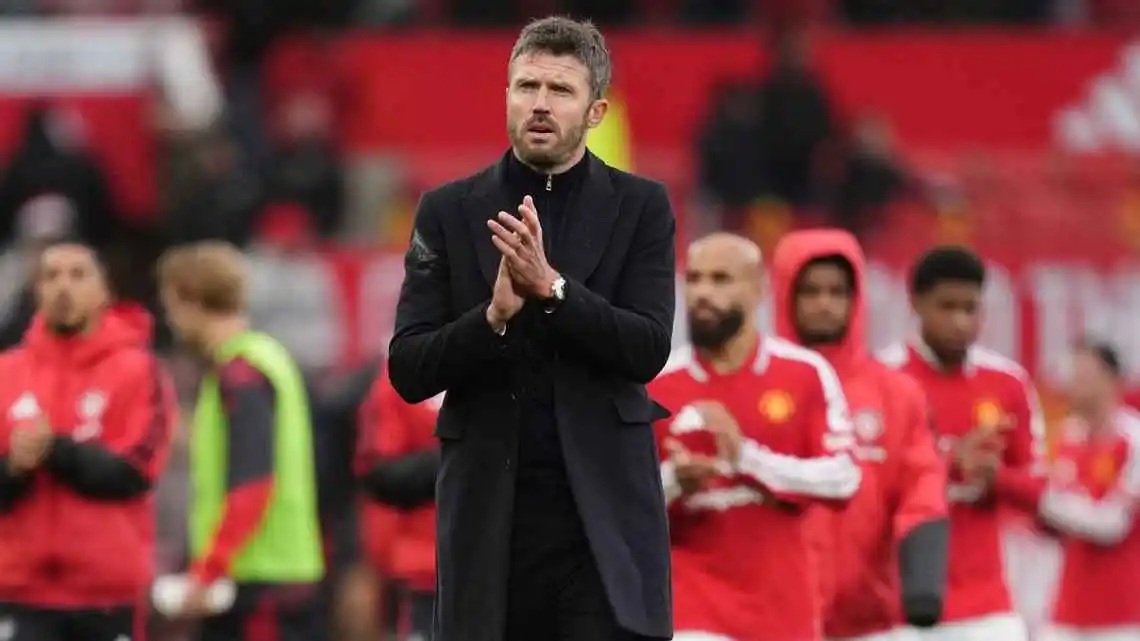
Manchester United’s Struggles Go Beyond the Manager
Manchester United’s ongoing struggles have raised a difficult question for one of English football’s most successful clubs: what happens when changing the manager no longer solves the problem? The team’s disappointing performances suggest that the issues at Old Trafford may run deeper than tactics, formations, or the person standing on the touchline. When players repeatedly fail to deliver under different leadership, the club must examine whether its squad has the consistency, mentality, and quality required to compete at the highest level.
The reported 3-0 defeat against Bournemouth at Old Trafford highlighted the frustration surrounding United’s performances. Instead of responding with determination, the team delivered another display that raised concerns about its ability to handle pressure. For a club with Manchester United’s history, resources, and global following, such results are more than disappointing. They raise serious questions about recruitment, player accountability, and the long-term direction of the team.
The central issue is not simply whether one manager can find the right combination of players. It is whether the squad can consistently execute a game plan, respond to setbacks, and show the commitment expected from players representing one of the biggest clubs in world football.
Another Manager, Another Disappointing Performance
Manchester United have spent years searching for the right managerial appointment. Different coaches have arrived with their own philosophies, tactical preferences, and plans to rebuild the team. Yet the club has continued to experience periods of inconsistency, disappointing results, and performances that fall short of its ambitions.
Every manager faces the challenge of adapting tactics to the players available. Some prefer aggressive pressing, while others prioritize possession, defensive organization, or quick counterattacks. A successful squad must be capable of adapting to these demands. However, tactical adjustments can only achieve so much when players fail to make the right decisions, lose individual battles, or struggle to maintain concentration throughout a match.
The concern for Manchester United is that the same patterns appear regardless of who is in charge. A new manager may initially bring optimism, but that enthusiasm quickly fades if the team continues to make familiar mistakes. Supporters then begin questioning the coach, the players, and the club’s decision-making process.
This cycle creates an unstable environment. Managers face pressure to produce immediate improvements, while players may find themselves working under yet another system. Without a clear long-term strategy, the club risks repeating the same mistakes rather than addressing their underlying causes.
Why Player Accountability Matters
Football managers are responsible for preparing their teams, selecting lineups, and making tactical decisions. However, players must take responsibility for what happens on the pitch. Even the most detailed game plan can collapse when individuals fail to track opponents, lose possession carelessly, or switch off during important moments.
At Manchester United, the expectation is especially high. Players wear a shirt associated with decades of domestic and European success. That history does not guarantee victories, but it creates a standard of professionalism and competitive commitment that the team is expected to uphold.
Accountability means more than criticizing players after a defeat. It involves examining individual performances, recognizing recurring weaknesses, and demanding consistent improvement. Players who repeatedly underperform should not automatically retain their positions simply because of their reputation, transfer fees, or previous achievements.
Selection must reflect current performance as well as tactical suitability. If a player is struggling, the manager should have the freedom to make difficult decisions without being forced to rely on familiar names. At the same time, replacements must demonstrate that they can offer greater energy, discipline, or effectiveness.
Without meaningful competition for places, underperformance can become difficult to correct. Manchester United need a squad in which every player understands that selection depends on contribution rather than status.
The Tactical Problem Is Only Part of the Story
Tactics remain important, particularly in the Premier League, where opponents are quick to exploit defensive weaknesses and poor transitions. A team that presses without coordination can leave dangerous spaces behind its midfield. A side that struggles to build from the back may repeatedly surrender possession in vulnerable areas. Poor movement in the final third can also leave forwards isolated and limit scoring opportunities.
However, tactical problems do not explain every disappointing performance. Players must communicate, make quick decisions, and react intelligently when a match does not unfold as planned. Even when a manager’s strategy is imperfect, professional footballers are expected to maintain concentration and compete for every ball.
Manchester United’s challenge is to establish whether their difficulties are primarily tactical, technical, psychological, or a combination of all three. Repeatedly changing managers without a thorough assessment of the squad risks treating the symptoms rather than the cause.
A new coach might improve organization and restore confidence, but those improvements will be limited if the squad lacks the necessary depth or contains too many players who cannot consistently perform their assigned roles. The club must therefore evaluate its players honestly instead of assuming that another managerial appointment will automatically transform the team.
The Pressure of Playing for Manchester United
Playing for Manchester United comes with enormous expectations. Every poor performance receives intense attention, and every managerial decision can become a major talking point. For some players, that pressure can affect confidence and decision-making, particularly during a prolonged period of disappointing results.
When a team loses regularly, small mistakes can become more costly. Players may hesitate when making passes, avoid taking risks, or become increasingly concerned about criticism. Defensive uncertainty can spread throughout the team, while missed opportunities can intensify frustration.
Nevertheless, pressure is part of playing at an elite club. Manchester United cannot compete at the highest level if its players are unable to handle scrutiny or recover from setbacks. Mental resilience is essential, especially when results are poor and supporters are demanding answers.
The strongest teams do not avoid difficult periods entirely. They respond to them with discipline, communication, and collective effort. Players continue following their responsibilities, support one another after mistakes, and remain focused on the next opportunity.
For United, rebuilding that resilience requires more than motivational speeches. It demands clear standards, consistent leadership, and a dressing room in which every player is prepared to contribute when circumstances become difficult.
Fitness, Recovery, and Long-Term Performance
Tactical ability and mental resilience are important, but physical preparation also plays a significant role in modern football. Premier League players must cope with intense matches, demanding training sessions, travel, and crowded fixture schedules. Maintaining fitness and recovering effectively can help players sustain their performance throughout a long season.
A team’s conditioning program should be built around evidence-based training, appropriate nutrition, adequate sleep, injury prevention, and individualized recovery plans. Clubs also need to monitor workload carefully so that players can maintain intensity without unnecessarily increasing their risk of injury.
Long-term athletic performance is about more than short bursts of speed or strength. Consistent habits can support overall well-being and help athletes manage the physical demands of competitive sport. Readers interested in general wellness and longevity can explore the Ragers Longevity collection for related content and products.
However, fitness alone cannot solve Manchester United’s problems. Even a physically prepared squad needs clear tactical instructions, technical quality, discipline, and the determination to execute its responsibilities. Conditioning should support a wider performance strategy rather than become an excuse for poor results.
Why Constant Managerial Changes Can Make Things Worse
Replacing a manager can sometimes be necessary. If results remain poor, tactical weaknesses persist, or the relationship between the coach and squad breaks down, a change in leadership may provide an opportunity to reset the team.
However, changing managers too frequently can create additional complications. Each coach may introduce different formations, training methods, and expectations. Players must continually adapt, and recruitment decisions can become fragmented when every new appointment has different priorities.
One manager might favor technically gifted midfielders, while another wants greater physicality and defensive discipline. If recruitment does not follow a consistent footballing strategy, the squad can become a collection of players selected for incompatible systems.
This creates a difficult cycle: a manager struggles with the available squad, results deteriorate, the manager leaves, and the next coach inherits many of the same problems. The club then begins another rebuilding project without fully resolving the previous one.
Manchester United need stability, but stability should not mean protecting poor performances indefinitely. The club must combine a clear long-term vision with firm expectations for both managers and players. A consistent footballing structure can help ensure that recruitment, coaching, and player development support the same objectives.
Recruitment Must Address the Real Weaknesses
Building a competitive squad requires more than signing recognizable names. Recruitment should focus on the specific qualities a team needs, including defensive reliability, midfield control, creativity, pace, physical strength, and tactical intelligence.
A player can be talented individually yet struggle to fit into a team’s system. Another may have an impressive reputation but lack the consistency needed for a demanding Premier League campaign. Recruitment decisions must consider how potential signings complement existing players rather than evaluating them in isolation.
Manchester United also need to assess whether the squad has sufficient depth. Injuries, suspensions, and fixture congestion can expose weaknesses when suitable replacements are unavailable. A team that depends too heavily on a small group of players may struggle when those individuals lose form or miss matches.
At the same time, spending heavily does not guarantee success. Recruitment becomes effective when the club identifies clear needs, evaluates players carefully, and gives them an environment in which they can develop.
The objective should be to create a balanced squad capable of performing consistently under pressure. That requires patience, detailed analysis, and the willingness to move on from players who no longer fit the club’s plans.
The Relegation Concern Cannot Be Ignored
When Manchester United struggle near the bottom of the Premier League table, the conversation changes dramatically. Instead of discussing European qualification or competing for major trophies, attention turns toward securing enough points to remain in the division.
Relegation would have enormous sporting and financial consequences for a club of United’s size. It could affect commercial income, player contracts, recruitment, and the club’s ability to attract elite talent. The psychological impact on supporters and players would also be significant.
However, the possibility of relegation should be assessed through verified league standings and results rather than treated as inevitable after a disappointing run. A few poor performances can create serious pressure, but the final outcome depends on the remaining fixtures, the form of rival teams, and the ability to respond.
If United find themselves close to the relegation zone, the immediate priority must be practical. The team needs points, defensive organization, greater consistency, and players who understand the urgency of the situation.
This is not the moment for individuals to focus on personal disputes or public criticism of tactical decisions. Disagreements may need to be addressed internally, but the collective objective must remain clear: improve performances and secure results.
What the Next Manchester United Manager Must Do
Whoever leads Manchester United next will inherit more than a tactical challenge. The new manager will need to rebuild confidence, establish standards, and determine which players can be trusted to carry out the club’s plans.
The first priority should be identifying a reliable core. A successful team needs players who consistently perform their defensive duties, maintain possession under pressure, and contribute to attacking moves. Reputation alone cannot guarantee a place in the starting lineup.
The next step is to simplify the team’s approach where necessary. Players struggling with confidence may benefit from clearly defined responsibilities and a system that makes the most of their strengths. Tactical complexity is useful only when the squad can execute it effectively.
The manager must also establish accountability. Training performances, match contributions, fitness, and professionalism should all influence selection. Players need to understand that standards apply equally across the dressing room.
Finally, the club’s leadership must support a coherent long-term plan. The manager should not be expected to solve every structural problem alone. Recruitment, sports science, player development, and performance analysis must all contribute to improving results.
Even then, progress will depend on the players. A new coach can provide direction, but the squad must demonstrate the willingness and ability to follow it.
Manchester United Need a Cultural Reset, Not Just a New Face
Manchester United’s greatest challenge may be restoring a culture in which strong performances are expected rather than celebrated as temporary improvements. A club with such a history cannot rely on its name to intimidate opponents or guarantee success.
A genuine reset involves making difficult decisions about squad construction, player development, and leadership. It also requires the club to accept that rebuilding may take time, even while demanding immediate commitment and competitive performances.
Supporters want to see players fighting for possession, helping teammates defensively, and responding positively after conceding goals. They want a team that looks organized and determined, even when it is not playing particularly well. These qualities cannot guarantee victory, but their absence makes consistent success much harder to achieve.
The club must also avoid confusing public criticism with meaningful accountability. Blaming individuals after every defeat may satisfy frustration temporarily, but sustained improvement requires a careful examination of the entire football operation.
Managers should be evaluated fairly, players should be held responsible for their performances, and recruitment decisions should be judged against the club’s long-term needs. Every part of the organization must contribute to a shared standard.
Final Thoughts: The Players Must Be Part of the Solution
Manchester United’s recurring struggles raise a fundamental question about the relationship between managers and players. A coach can introduce a new system, motivate the dressing room, and make important selection decisions, but none of those measures guarantees success when the squad cannot consistently deliver on the pitch.
The reported defeat to Bournemouth illustrates why another managerial change, by itself, may not be enough. If the same weaknesses continue after a new appointment, United will have to confront the possibility that their problems are rooted in squad quality, recruitment, accountability, and the club’s wider footballing structure.
The next manager deserves the opportunity to implement a clear plan, but that opportunity must come with honest assessments of the players and realistic expectations. Those who perform should earn their places. Those who repeatedly fail to meet the required standard should face genuine competition for their positions.
Manchester United do not need a guarantee that one particular manager will solve everything. They need a coherent strategy, a balanced squad, and players prepared to take responsibility for their performances.
Until those elements come together, changing the name on the manager’s office door risks producing the same disappointing story all over again.