
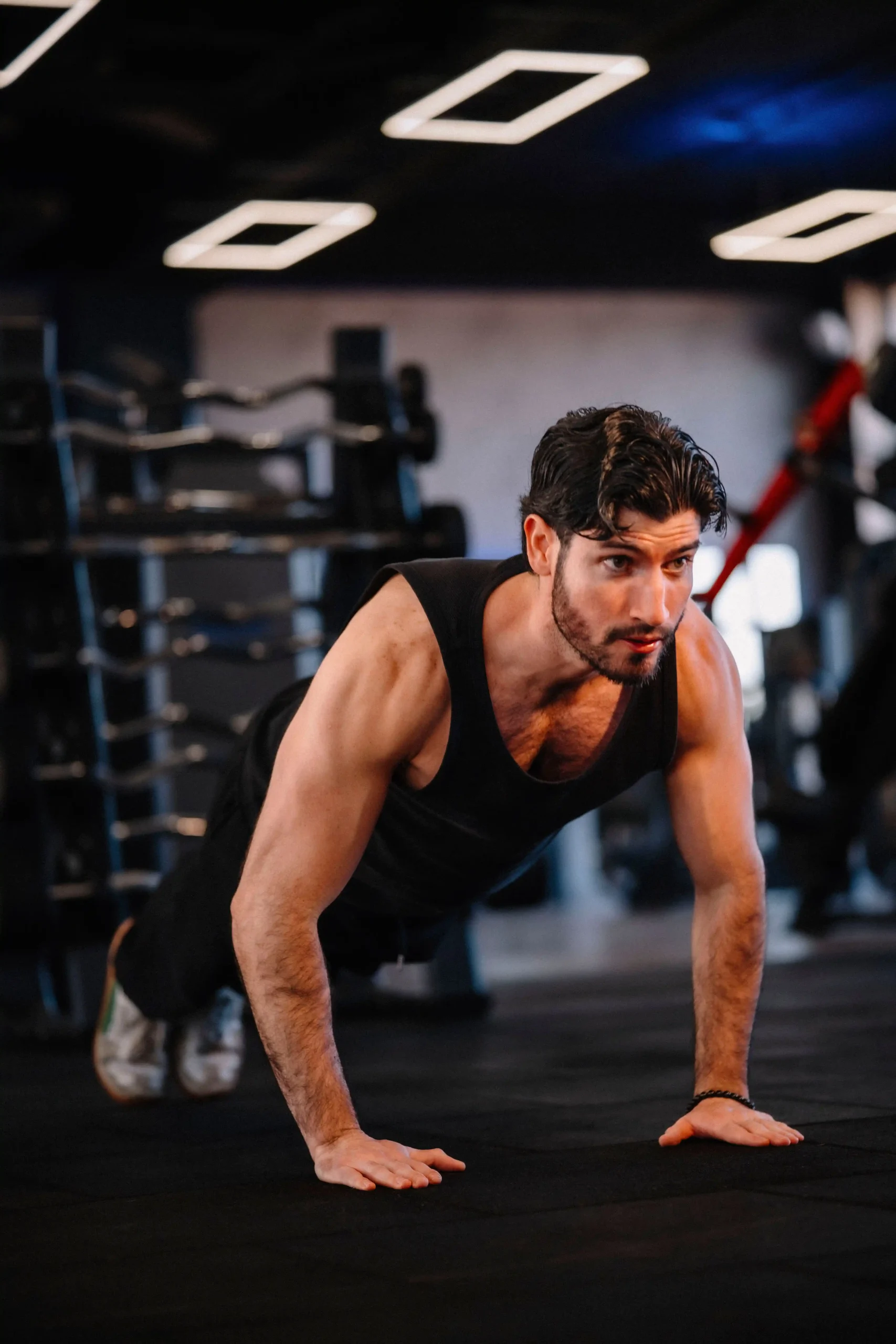
Building muscle does not require spending hours in the gym every day. What matters more is having a structured workout plan, training consistently, eating enough to support growth, and giving your body enough time to recover. For men who want a straightforward way to organize their strength training, the push-pull-legs workout plan remains one of the most effective approaches.
The push-pull-legs workout, commonly called PPL, divides strength training into three focused sessions. Push workouts target the chest, shoulders, and triceps. Pull workouts focus on the back, biceps, and rear shoulders. Leg workouts train the quadriceps, hamstrings, glutes, and calves. This structure allows you to train related muscle groups together while giving other muscles time to recover.
Whether you are returning to the gym, trying to gain lean muscle, or looking for a more organized strength training routine, a well-designed push-pull-legs program can give you a clear path forward. The key is not simply doing more exercises. It is choosing the right movements, using appropriate volume, gradually increasing training demands, and staying consistent.
What Is a Push-Pull-Legs Workout?
A push-pull-legs workout plan organizes exercises according to the primary movement patterns involved. Push exercises involve movements where you press resistance away from your body. Pull exercises involve bringing resistance toward your body. Leg training focuses on lower-body movements such as squats, lunges, hinges, and calf raises.
The simplicity of the system is one of its biggest advantages. Instead of trying to train every muscle in one long session, you can concentrate on specific muscle groups during each workout.
A traditional three-day PPL schedule could look like this: Monday is push, Wednesday is pull, and Friday is legs. Men who want to train more frequently can repeat the cycle over six days, followed by a rest day. Your schedule should depend on your experience, recovery ability, available time, and overall fitness goals.
For many people, three well-planned strength workouts per week can be enough to make meaningful progress, especially when consistency and progressive overload are prioritized.
Push Day: Chest, Shoulders, and Triceps
Push day focuses primarily on the muscles used for pressing movements. The chest, shoulders, and triceps work together during exercises such as bench presses and overhead presses.
Start your workout with a compound movement that allows you to use relatively heavy resistance while maintaining good form. The barbell bench press is a classic option for building chest strength and size. Perform 3 to 4 sets of approximately 6 to 10 repetitions.
Next, move to an overhead pressing exercise. A seated or standing dumbbell shoulder press can effectively train the shoulders while also requiring the triceps to contribute. Aim for 3 sets of 8 to 12 repetitions.
For additional chest volume, perform an incline dumbbell press for 3 sets of 8 to 12 repetitions. The incline position shifts more emphasis toward the upper portion of the chest.
After your pressing movements, add a lateral raise to target the side delts. Perform 3 sets of 12 to 15 repetitions using controlled movements. You do not need extremely heavy dumbbells for this exercise. Maintaining tension and avoiding excessive swinging are more important.
Finish your push workout with a triceps-focused movement such as cable pushdowns. Perform 3 sets of 10 to 15 repetitions.
A practical push workout could therefore include the bench press, dumbbell shoulder press, incline dumbbell press, lateral raises, and cable triceps pushdowns. This gives you a combination of compound and isolation exercises without unnecessarily making the workout complicated.
Pull Day: Back, Rear Delts, and Biceps
Pull day focuses on the muscles responsible for pulling movements. Your back should be the main priority, with your biceps and rear shoulders receiving additional work.
Begin with pull-ups or lat pulldowns. If you can perform controlled pull-ups, they are an excellent bodyweight movement for developing the back. If pull-ups are difficult, a lat pulldown provides an easier way to adjust resistance. Perform 3 to 4 sets of 6 to 12 repetitions.
Follow this with a rowing movement. A chest-supported dumbbell row, seated cable row, or barbell row can help develop overall back thickness. Perform 3 sets of 8 to 12 repetitions.
Next, consider adding a single-arm dumbbell row for another back-focused movement. Three sets of 8 to 12 repetitions per side can provide additional training volume while allowing you to focus on each side independently.
Rear-delt exercises are useful for creating a balanced shoulder workout. Face pulls or reverse flyes can be performed for 3 sets of 12 to 15 repetitions.
Finish with biceps curls. Dumbbell curls, cable curls, or hammer curls can be performed for 3 sets of 10 to 15 repetitions.
The goal of pull day is not simply to make your back tired. Focus on controlled repetitions and actually moving through the intended range of motion. Your arms will naturally assist during pulling exercises, but your back should remain the primary focus.
Leg Day: Build Stronger and More Muscular Legs
Leg day is often the most demanding session in a push-pull-legs workout plan, but it is essential for developing a balanced physique and overall strength.
Start with a squat variation. The barbell back squat is a traditional choice, but goblet squats, hack squats, and leg presses can also be effective depending on your experience and equipment. Perform 3 to 4 sets of 6 to 10 repetitions.
Next, include a hip-hinge movement that trains the posterior chain. Romanian deadlifts are an excellent option for targeting the hamstrings and glutes. Perform 3 sets of 8 to 12 repetitions while maintaining control throughout the movement.
For additional quadriceps training, use the leg press for 3 sets of 10 to 12 repetitions. You can then add a leg curl to specifically train the hamstrings for 3 sets of 10 to 15 repetitions.
Finish with standing or seated calf raises. Perform 3 to 4 sets of 12 to 20 repetitions.
A complete leg workout does not need to contain ten different exercises. Squat variations, a hip hinge, a leg press, hamstring curls, and calf raises can provide plenty of productive training when performed with appropriate intensity.
How Many Days a Week Should Men Follow PPL?
There is no single schedule that works for every man. Your ideal training frequency depends on your experience and ability to recover.
A beginner can start with three days per week:
Monday: Push
Wednesday: Pull
Friday: Legs
This schedule provides recovery days between workouts and can be easier to maintain alongside work and family responsibilities.
An intermediate lifter may use a six-day rotation:
Monday: Push
Tuesday: Pull
Wednesday: Legs
Thursday: Push
Friday: Pull
Saturday: Legs
Sunday: Rest
Training six days per week is not automatically better than training three days. More workouts can mean more opportunities to stimulate muscle growth, but they also create greater recovery demands.
If your performance is consistently declining, you feel exhausted, or your muscles and joints are not recovering between sessions, increasing training frequency may not be the answer. A sustainable workout schedule is one you can follow consistently for months rather than one you can tolerate for only a few weeks.
How Many Sets and Reps Should You Do to Build Muscle?
Muscle growth can occur across a relatively broad range of repetitions when sets are challenging and performed with appropriate technique. For many exercises, a range of approximately 6 to 15 repetitions works well for hypertrophy-focused training.
Compound movements such as squats, bench presses, rows, and overhead presses can generally be performed with moderate repetitions and heavier resistance. Isolation exercises such as lateral raises, curls, triceps extensions, and calf raises can often work well with somewhat higher repetitions.
Rather than obsessing over one perfect number, focus on gradually improving your performance. If you can complete all prescribed repetitions with good technique and still have plenty of energy left, it may be time to increase the resistance slightly.
Progressive Overload Is the Key to Continued Growth
One of the most important principles in a muscle-building workout plan is progressive overload. Your muscles need a reason to adapt. Over time, you should gradually increase the demands placed on them.
Progressive overload does not always mean adding more weight. You can increase the number of repetitions, improve your technique, increase resistance, add a set, or perform the same weight with better control.
For example, imagine you can bench press 150 pounds for 8 repetitions with good form. Over several workouts, you may eventually reach 150 pounds for 10 repetitions. Once that becomes manageable, you might increase the weight slightly and work back toward your target repetition range.
Keep a simple workout log so you know what you lifted during previous sessions. Without tracking your workouts, it becomes much harder to determine whether you are actually progressing.
Rest Between Sets Matters
Rest periods are often overlooked when people are trying to build muscle. If you rush from one set to another without recovering, your performance can suffer.
For demanding compound exercises, resting around two to three minutes between sets can help you maintain strength and quality. For smaller isolation exercises, shorter rest periods may be sufficient.
The objective is not to make every workout feel like a cardio session. If you need additional recovery before your next heavy set, take it. Quality repetitions are more valuable than rushing through a workout simply to finish faster.
Nutrition and Recovery Are Part of the Program
Training provides the stimulus for muscle growth, but recovery and nutrition support the adaptation process.
Protein is particularly important for people who are trying to build and maintain muscle. Include protein-rich foods such as eggs, lean meat, poultry, fish, dairy products, beans, and other suitable protein sources throughout your day.
Your overall calorie intake also matters. If you are trying to gain muscle, consistently eating too little can make progress more difficult. On the other hand, gaining muscle does not require eating unlimited amounts of food.
Sleep should also be a priority. Your body needs adequate recovery between training sessions, especially when you are lifting several days per week. A demanding workout program combined with poor sleep and inadequate nutrition can quickly become difficult to sustain.
Long-term fitness is also about more than what happens inside the gym. Supporting healthy aging and overall well-being can become increasingly important as you get older. For men interested in broader longevity and wellness, you can explore the Ragers longevity collection as part of a larger approach to taking care of your health over time.
Common Push-Pull-Legs Mistakes to Avoid
One common mistake is doing too many exercises. More exercises do not automatically produce more muscle. If your workout contains excessive volume, you may simply create additional fatigue without improving the quality of your training.
Another mistake is changing the routine every week. Muscle growth requires consistency. Give your program enough time to work before constantly replacing exercises.
Poor technique is another problem. Adding weight at the expense of proper form can shift tension away from the target muscle and increase the risk of injury. Choose a weight that allows you to maintain control.
Some men also focus heavily on their chest and arms while neglecting their legs and back. The push-pull-legs system works well because it naturally encourages more balanced training.
Finally, do not underestimate recovery. Training harder every day is not necessarily the fastest route to building muscle. Your body needs time to repair and adapt.
How Long Does It Take to See Results?
Muscle-building results do not happen overnight. Beginners may notice improvements in strength relatively quickly because their bodies are adapting to resistance training. Visible changes in muscle size generally take longer and depend on training consistency, genetics, nutrition, sleep, age, and starting fitness level.
Instead of judging progress solely by the mirror, track your strength, repetitions, measurements, and how your clothes fit. Taking progress photos under similar lighting and conditions can also make gradual changes easier to recognize.
The most important factor is consistency. A good push-pull-legs workout plan followed for many months is more valuable than a perfect program followed for only two weeks.
Building a Sustainable Muscle-Building Routine
The best workout plan is one that fits your lifestyle. If you can realistically train three days per week, start with three days. If you have the experience, time, and recovery capacity for six days, a six-day PPL routine may be appropriate.
Start each workout with a warm-up, prioritize compound movements, add targeted isolation exercises, track your progress, and gradually increase training demands. Most importantly, do not feel pressured to train like a professional bodybuilder if your goal is simply to become stronger, more muscular, and healthier.
A push-pull-legs workout plan gives men a simple framework for organizing their training without making fitness unnecessarily complicated. With consistent resistance training, sufficient protein, adequate recovery, and progressive overload, you can build a stronger physique while developing habits that support long-term fitness.
Building muscle is ultimately a long-term process. There will be workouts when you feel strong and sessions when your performance is not quite where you want it to be. What matters is continuing to show up, adjusting when necessary, and giving your body the time and resources it needs to improve.
For men who want a structured approach to strength training, PPL provides a flexible foundation that can evolve with your experience. Start with manageable workouts, focus on quality movement, track your progress, and let consistency do the heavy lifting.