
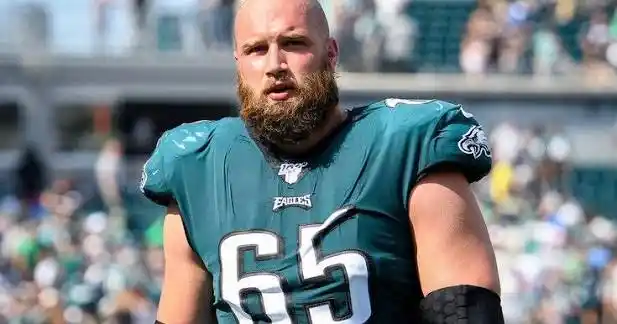
For years, professional athletes have often been portrayed as the ultimate image of physical strength. They train relentlessly, compete under enormous pressure, play through injuries, and are expected to perform when millions of people are watching. But behind that image of toughness is a reality that is increasingly becoming part of the conversation around men’s health: even the strongest-looking men can struggle with anxiety, stress, and other mental health challenges.
Philadelphia Eagles offensive tackle Lane Johnson has become one of the most recognizable athletes to speak openly about that reality. A two-time Super Bowl champion and longtime NFL star, Johnson has discussed his experiences with anxiety and the pressure that comes with competing at the highest level. In a recent interview with Men’s Health, he again addressed performance anxiety and the mental challenges that can accompany elite competition.
His story offers a valuable reminder that physical strength and mental well-being are not opposites. A man can be successful, athletic, confident, and accomplished while still experiencing anxiety. Johnson’s willingness to discuss his experiences also highlights why conversations about men’s mental health remain so important.
The Pressure Behind the Image of Strength
Professional sports create an environment where physical performance is constantly evaluated. Every game, mistake, injury, and missed opportunity can become part of public discussion. For athletes, the pressure is not limited to what happens on the field. Expectations from coaches, teammates, fans, media, family, and even the athletes themselves can become overwhelming.
Johnson has described how anxiety has followed him since his college years and became particularly noticeable around game days. In his recent Men’s Health interview, he discussed performance anxiety and the physical symptoms he experienced before competition, including dry heaving. He connected some of those feelings to the perfectionist mindset that can develop in football and other competitive environments.
The important point is that anxiety does not always look the way people expect. Someone experiencing it may appear confident, successful, and completely in control from the outside. They may still show up for work, exercise regularly, support their families, and accomplish impressive goals.
That disconnect between appearance and reality is one reason men’s mental health can be difficult to recognize.
Lane Johnson’s Long Experience With Anxiety
Johnson’s history with anxiety is not new. According to the Philadelphia Eagles, he was diagnosed with an anxiety disorder in 2008 while attending Kilgore College. He later became more public about his mental health struggles after stepping away from football in 2021. The Eagles now describe him as an advocate for mental health awareness.
In 2021, Johnson missed three games while dealing with anxiety and depression. He later explained that he had kept much of what he was experiencing to himself because he felt ashamed and viewed it as a weakness. He eventually received support from his family, friends, teammates, and the Eagles organization.
His experience is significant because it challenges one of the most persistent ideas surrounding masculinity: the belief that men should simply push through emotional difficulties without talking about them.
For Johnson, continuing to hide what he was experiencing did not make the problem disappear. Opening up allowed him to receive support and eventually become an advocate for others who might be going through something similar.
Why Men Often Hide Mental Health Struggles
Men can face unique social pressures when it comes to discussing emotional difficulties. Traditional ideas about masculinity sometimes encourage men to appear independent, emotionally controlled, and capable of handling problems alone.
That can make admitting anxiety feel uncomfortable.
A man may worry that talking about mental health will make him appear weak, unreliable, or less capable. Someone who has built an identity around physical strength may find it particularly difficult to acknowledge something that cannot be solved simply by working harder or becoming stronger.
Johnson has spoken about the stigma surrounding mental health in professional football and has encouraged people not to bottle up their struggles. His story illustrates how damaging isolation can become when someone believes they have to maintain a perfect exterior.
The reality is that asking for help does not eliminate strength. In many situations, recognizing that you need support requires honesty and courage.
Performance Anxiety Is Not Limited to Athletes
Although Johnson’s experiences occurred within professional football, performance anxiety is not exclusive to athletes.
Men can experience similar pressure in workplaces, businesses, schools, relationships, public speaking, creative careers, and other competitive environments. A person may worry about making mistakes, disappointing others, losing an opportunity, or failing to meet expectations.
The circumstances may be different, but the underlying feelings can be similar.
A businessman may feel anxious before an important presentation. A student may experience intense stress before an examination. A father may worry about providing for his family. An employee may constantly fear making a mistake at work. An athlete may experience overwhelming nerves before a game.
These experiences demonstrate that mental health challenges are not limited to people who appear unsuccessful or unable to cope.
Physical Strength Does Not Guarantee Mental Health
One of the most powerful lessons from Johnson’s story is that physical strength cannot automatically protect someone from mental health challenges.
Johnson is an elite offensive lineman whose career has required extraordinary physical preparation. He has spent years developing the strength, conditioning, and discipline required to compete in the NFL. Yet his physical accomplishments did not prevent him from experiencing anxiety.
That distinction is important for men who believe that being physically fit should automatically make them mentally resilient.
Exercise can be an important part of a healthy lifestyle, but mental health is influenced by many factors. Stress, genetics, life circumstances, relationships, work pressure, sleep, trauma, and other experiences can all affect how someone feels.
Building muscle or improving cardiovascular fitness can be beneficial, but mental well-being requires its own attention.
The Importance of Talking About Mental Health
Johnson’s public conversations demonstrate why visibility matters.
When a successful professional athlete talks about anxiety, it can challenge the assumption that mental health struggles only happen to people who are unable to cope with life. His story shows that someone can achieve extraordinary professional success and still need support.
The Philadelphia Eagles have highlighted Johnson’s advocacy work, noting that he has participated in mental health initiatives and used his experience to encourage greater awareness and treatment.
That kind of openness can make it easier for other men to recognize their own experiences.
Sometimes the first step is simply realizing that someone else has felt the same way.
What Men Can Learn From Lane Johnson’s Experience
Johnson’s story does not provide a universal solution to anxiety, but it does offer several important lessons.
The first is that ignoring mental health problems does not necessarily make them disappear. Johnson has spoken about how long he kept his struggles private before eventually opening up.
The second is that success does not automatically eliminate anxiety. A person can achieve career goals and still experience emotional difficulties.
The third is that support matters. Johnson has credited his family, friends, teammates, and organization with helping him through difficult periods.
Finally, his experience demonstrates that men do not have to face mental health challenges alone.
Mental Health Belongs in the Conversation About Men’s Health
Men’s health has traditionally focused heavily on physical issues, including muscle development, cardiovascular fitness, nutrition, weight management, and athletic performance. Those areas remain important, but men’s health is much broader.
Mental well-being deserves the same attention.
A genuinely healthy lifestyle should consider both physical and psychological health. Getting enough sleep, staying active, eating well, maintaining meaningful relationships, managing stress, and seeking professional support when necessary can all be part of a comprehensive approach to wellness.
For readers interested in exploring additional wellness resources, the Ragers Mental Health Collection provides a collection of health-related products focused on mental health and wellness.
Because health needs vary from person to person, anyone considering medication or other medical treatments should consult an appropriately qualified healthcare professional. A product or wellness resource should not replace professional evaluation, diagnosis, or treatment when those are needed.
The larger message is that taking mental health seriously should be considered part of taking care of the whole body.
The Changing Definition of Masculinity
Stories like Johnson’s are also contributing to a broader conversation about what masculinity can look like.
Being strong does not have to mean never feeling anxious. Being confident does not mean never having doubts. Being successful does not mean never needing help.
A healthier understanding of masculinity can make room for vulnerability without treating it as weakness.
Men can be competitive and compassionate. They can be physically strong while openly discussing their emotions. They can pursue ambitious goals while recognizing when they need rest or support.
This does not mean every personal struggle needs to be shared publicly. Privacy is completely valid. But men should have the freedom to seek help without feeling that doing so makes them less masculine.
Why His Story Matters Beyond Football
Lane Johnson’s story extends beyond the NFL because the underlying issue is universal: people can struggle with things that others cannot see.
The pressure to perform can exist in almost every part of modern life. Social media can make people feel that everyone else is succeeding. Workplace culture can encourage constant productivity. Financial responsibilities can create stress. Family expectations can become overwhelming. Even personal fitness goals can become a source of pressure when appearance is constantly compared with unrealistic standards.
Johnson’s openness offers another perspective. Strength is not simply the ability to tolerate pressure indefinitely. Sometimes strength means recognizing when the pressure has become too much and doing something about it.
Creating a Healthier Approach to Men’s Wellness
A healthier approach to men’s wellness begins with recognizing that physical and mental health are connected.
Regular physical activity can be part of a healthy lifestyle, but it should not become another source of unhealthy pressure. Rest and recovery matter. Sleep matters. Relationships matter. Emotional support matters.
Men should also be encouraged to develop habits that allow them to recognize changes in their mental well-being. Persistent anxiety, overwhelming stress, changes in sleep, difficulty functioning, or feelings that interfere with everyday life are reasons to consider speaking with a qualified professional.
There is no universal fitness routine, diet, or wellness strategy that can solve every mental health challenge. Individual circumstances are different, which is why professional guidance can be important.
A Stronger Future for Men’s Mental Health
The conversation around men’s mental health is changing, but there is still work to do. Athletes such as Lane Johnson can help move that conversation forward by showing that mental health struggles are not incompatible with achievement.
His story also demonstrates the importance of replacing silence with communication.
For years, many men were taught to hide fear, anxiety, sadness, and uncertainty. But hiding those emotions does not necessarily make them disappear. Creating environments where men can talk honestly about what they are experiencing can make it easier to seek appropriate support.
Professional athletes have a particularly powerful platform because their public image is so closely associated with physical strength. When someone like Johnson acknowledges anxiety, it sends a message that mental health does not discriminate based on size, success, money, or athletic ability.
Final Thoughts
Lane Johnson’s openness about anxiety offers an important lesson for men’s health: looking strong does not mean you have to feel strong every moment.
His career demonstrates extraordinary physical ability and professional success, but his willingness to discuss anxiety shows another kind of strength. By speaking about experiences that he once kept private, Johnson has helped challenge the idea that men should simply suffer in silence.
Men’s health should never be limited to what can be measured in the gym. Strength, endurance, nutrition, sleep, relationships, stress management, and mental well-being all contribute to a healthier life.
The most important lesson may be simple: asking for help does not make a man weak. Recognizing that something is wrong, talking about it, and seeking appropriate support can be a meaningful part of taking care of yourself.
As conversations around men’s mental health continue to evolve, stories like Lane Johnson’s can help make it easier for other men to realize that they are not alone—and that strength can include having the courage to speak up.
Sources and References
Men’s Health — Lane Johnson on Performance Anxiety and Mental Health
A Candid Conversation With Lane Johnson on What People Often Overlook With Elite Athletes
Philadelphia Eagles — Lane Johnson’s Mental Health Advocacy
Lane Johnson Player Biography and Mental Health Advocacy
Philadelphia Eagles — Lane Johnson Opens Up About Anxiety Disorder
Lane Johnson Opens Up Candidly About His Battle With Anxiety Disorder
ABC News — Lane Johnson Discusses Anxiety and His 2021 Absence
Lane Johnson Opens Up About Anxiety and Three-Game Absence