
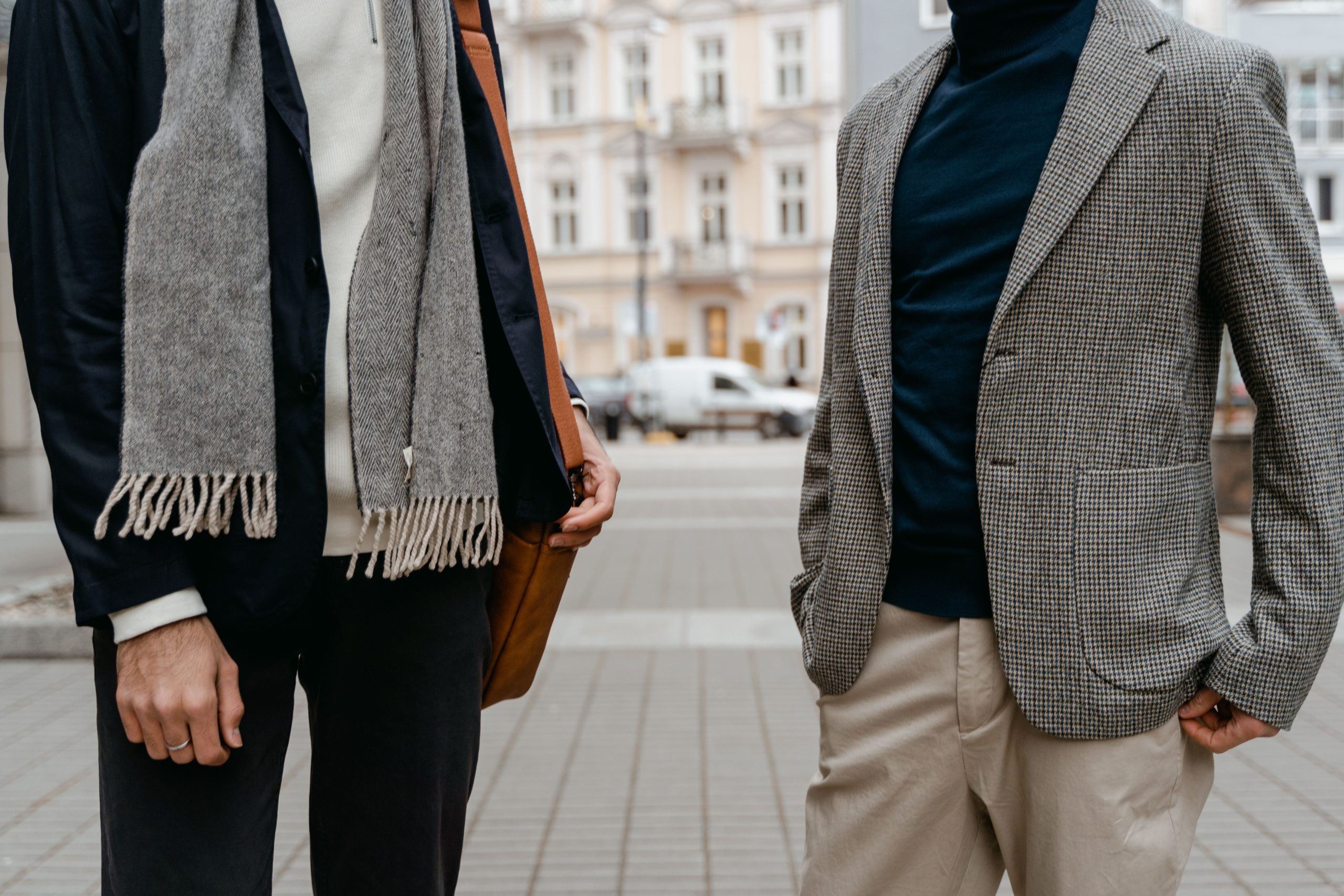
For a long time, men’s fashion was treated as if there were only a few acceptable answers.
A good suit. A clean white shirt. A pair of jeans. A neutral jacket. A decent pair of sneakers. Maybe a watch if the occasion called for it.
There was nothing particularly wrong with any of those things. The problem was the idea that men’s style had to stop there.
That attitude is changing.
The latest menswear conversation is becoming considerably more adventurous, and Fashion Month has made that shift impossible to miss. Across recent Spring/Summer 2027 collections, designers have been playing with proportion, tailoring, color, accessories, relaxed silhouettes and unexpected styling. Vogue’s menswear trend report identified everything from louche tailoring and oversized shorts to emphasized waists, unusual denim and statement brooches, describing the overall movement as a push toward more individuality.
That does not mean every man suddenly needs to dress like he is walking into a runway show.
It means the definition of men’s style is getting wider.
Tailoring is still here. Classic clothing is still here. Minimalism is still here.
But they are no longer the only options.
The modern man’s wardrobe is beginning to make room for personality.
The Suit Is Not Going Anywhere
The easiest way to misunderstand the current menswear movement is to assume that more expressive fashion means the death of traditional tailoring.
It is almost the opposite.
Tailoring is becoming interesting again precisely because designers are changing what a suit can look and feel like.
Vogue’s Spring/Summer 2027 menswear forecast identified a renewed interest in formality, including suits, blazers, ties and more intentional color combinations. Searches for men’s outfit combinations also increased substantially on Pinterest between 2025 and 2026, suggesting that men are becoming more deliberate about how individual pieces work together.
The difference is in the attitude.
The suit is no longer automatically associated with corporate uniforms.
It can be relaxed.
It can be oversized.
It can be colorful.
It can be worn with sneakers.
It can be styled with an open shirt.
It can be paired with an unexpected accessory.
It can have a wider trouser.
It can have a softer shoulder.
It can be worn because the person actually likes dressing up rather than because someone told him that a particular event requires it.
That is a meaningful change.
The modern version of tailoring is less about following a rigid dress code and more about using structure as a foundation for personal style.
Men Are Dressing With More Intention
There is also a cultural shift happening underneath the clothes.
Men are becoming more interested in the details of what they wear.
That does not necessarily mean everyone is suddenly obsessed with fashion.
It means more men are recognizing that clothing communicates something.
A jacket can make an outfit feel sharper.
A particular pair of trousers can change proportions.
A scarf can introduce color.
A watch can become a finishing detail rather than the entire focus.
A pair of loafers can make jeans feel more intentional.
A statement jacket can turn a basic outfit into something memorable.
The pieces themselves are not necessarily new.
The willingness to experiment with them is.
Vogue’s analysis of the Spring/Summer 2027 menswear season described the broader market as responding to men who are embracing fashion more actively, with experts noting that the industry is meeting increasing demand for more expressive menswear.
That is important because fashion only changes when consumers are willing to wear the change.
Runway designers can propose enormous silhouettes and unusual combinations, but those ideas only become culturally meaningful when men begin adapting them to everyday wardrobes.
And that adaptation is already happening.
Relaxed Tailoring Is Rewriting The Rules
One of the biggest changes is the way tailoring is being loosened.
The rigid, sharply structured suit is making room for something softer.
Trousers can be wider.
Jackets can be longer.
Fabrics can move more freely.
Shoulders can become less aggressive.
The result is still polished, but it feels less formal.
Vogue’s review of the Spring 2027 menswear collections highlighted “louche tailoring” as one of the season’s major directions, while also noting the return of breezier, elegantly draped tailoring associated with the Armani tradition.
This is particularly useful for men who want to dress better without looking like they are wearing a costume.
A relaxed blazer with a simple shirt and wider trousers can look sophisticated without appearing overly corporate.
A lightweight suit can be worn separately, allowing the jacket and trousers to become parts of completely different outfits.
A softer jacket can work with denim.
A tailored trouser can work with a knit polo.
A formal shirt can be worn underneath a casual jacket.
The possibilities expand when tailoring stops being treated as one complete uniform.
Proportion Is Becoming The Real Statement
For years, men’s fashion often focused on making clothing fit as closely and conventionally as possible.
Now proportion is becoming a major part of the conversation.
Big trousers.
Longer jackets.
Oversized shorts.
Wide-leg silhouettes.
More relaxed shirts.
Larger outerwear.
The Spring/Summer 2027 runway season included plenty of oversized, below-the-knee shorts, while designers also experimented with the relationship between the waist, jacket and trouser.
This matters because proportion can completely change an outfit without requiring loud colors or complicated patterns.
A man wearing a simple black shirt and wide trousers can look dramatically different from a man wearing the same shirt with slim trousers.
The clothing does not necessarily need to be louder.
The silhouette does the work.
That is one reason men’s fashion is becoming more interesting without necessarily becoming more complicated.
Color Is Moving Back Into The Conversation
Neutral colors will always have a place in men’s wardrobes.
Black, navy, gray, white, beige and brown are useful because they are easy to combine.
But a wardrobe built entirely around neutral colors can become predictable.
The current menswear movement is making more room for color.
Vogue’s Fall 2026 outerwear coverage points to shades such as candy-apple red, Kelly green, butter yellow and cobalt blue appearing in men’s jackets, while also highlighting textured fabrics and more expressive outerwear.
This does not mean every man needs a bright red coat.
A little color can go a long way.
A green jacket with dark denim.
A blue knit under a neutral coat.
A burgundy sweater with gray trousers.
A yellow accent in a scarf or sneaker.
A colorful shirt underneath a classic blazer.
Color becomes easier to wear when it is treated as an accent rather than a requirement.
And for men who are accustomed to dressing almost entirely in black, navy and gray, one strong color can make an entire wardrobe feel new.
Outerwear Is Becoming A Personality Piece
Jackets have always been practical, but they are becoming much more expressive.
GQ’s Fall 2026 menswear coverage identifies a wide range of outerwear directions, including field jackets, stand-collar jackets, textured fabrics, bold colors, plaids and even more unconventional prints. The broader movement draws from new-wave Ivy, vintage Americana and early-2000s influences.
That variety is important because outerwear often represents the easiest place to experiment.
A man who is not ready to wear colorful trousers can wear a colorful jacket.
Someone who does not want an oversized suit can try an oversized coat.
Someone who prefers classic clothes can add a textured field jacket.
Someone who dresses minimally can choose one distinctive outer layer and keep everything underneath simple.
The jacket becomes the personality piece.
And because it can be removed, the commitment is relatively low.
Accessories Are Getting More Attention
Men’s accessories have also become more interesting.
The watch is still important, but it is no longer the only accessory that matters.
Scarves, bags, jewelry, belts, hats, eyewear and even brooches are becoming more visible parts of men’s styling.
Vogue’s Spring 2027 menswear trend report specifically identified the brooch as one of the season’s unexpected details, alongside scarves, waist-focused accessories and other styling elements designed to give familiar outfits more personality.
This is where personal style becomes particularly useful.
A man does not need to completely rebuild his wardrobe to look different.
He can change the details.
A simple suit can look completely different with a textured tie.
A plain jacket can become more distinctive with a scarf.
A monochrome outfit can change with jewelry.
A classic coat can feel contemporary with a different bag.
The accessory does not have to dominate the outfit.
It simply needs to give it a point of view.
The Return Of The Statement Piece
The phrase “statement piece” has traditionally been associated more strongly with women’s fashion.
That distinction is becoming increasingly outdated.
Men can have statement pieces too.
A dramatic coat.
An unusual pair of shoes.
A colorful knit.
A patterned shirt.
A distinctive bag.
A vintage jacket.
A sculptural pair of sunglasses.
The key is balance.
If one part of the outfit is doing most of the talking, the rest can remain relatively simple.
That is often how expressive dressing becomes wearable.
The goal is not to make every item interesting.
The goal is to give the outfit one reason to be remembered.
Menswear Is Borrowing From The Past Without Looking Stuck There
Another reason men’s fashion feels more interesting right now is the way designers are revisiting older styles.
Ivy.
Americana.
Early-2000s fashion.
Classic tailoring.
Sportswear.
Workwear.
Military-inspired clothing.
Preppy dressing.
These references are returning, but they are not necessarily being reproduced exactly.
They are being edited.
A classic blazer might become oversized.
A preppy sweater might be paired with wider trousers.
A work jacket might appear in a more refined fabric.
A traditional shirt might be styled with unconventional proportions.
That is how fashion stays connected to history without becoming a costume.
The current menswear conversation is not really about inventing completely new clothing.
It is about recombining familiar clothing in new ways.
The Celebrity Effect Still Matters
Men’s fashion is also being influenced by entertainment culture.
Harry Styles has become one of the clearest examples of how a male musician can turn clothing into part of his broader artistic identity. Vogue’s Spring/Summer 2027 menswear forecast specifically cited his return to the spotlight and bold custom looks as part of the current fashion conversation.
That matters because celebrity fashion provides men with visible examples of what is possible.
For years, male celebrities were often photographed in variations of the same dark suit.
Now audiences are accustomed to seeing men experiment with silhouettes, colors, tailoring, jewelry and styling.
The effect extends beyond celebrities.
A man does not have to copy Harry Styles.
He can simply see a different possibility.
That is one of fashion’s most useful functions.
It expands the visual vocabulary.
Social Media Is Changing Men’s Style Too
Instagram, TikTok and Pinterest have also contributed to the shift.
Men can now see outfit inspiration from people who are not traditional fashion celebrities.
Street-style creators.
Stylists.
Designers.
Vintage enthusiasts.
Professional athletes.
Musicians.
Actors.
Ordinary men with strong personal style.
That creates a much wider range of references.
It also makes experimentation easier because men can see how a particular item looks in a real-world context.
The rise in searches for men’s outfit combinations is another indication that men are actively looking for styling information rather than simply buying isolated pieces. Vogue’s 2026 analysis found major increases in Pinterest searches related to men’s outfit color combinations and coordination.
That may seem like a small behavioral change, but it represents something larger.
Men are increasingly interested in the relationship between clothing pieces.
They are not just asking, “What should I buy?”
They are asking, “How do I wear this?”
That is a much more sophisticated fashion question.
The Best Part Is That You Do Not Have To Follow Every Trend
More interesting men’s fashion does not mean every man needs to wear every trend.
In fact, the opposite is true.
The more options become available, the more important personal editing becomes.
Maybe wide trousers work for you.
Maybe they do not.
Maybe you like colorful outerwear.
Maybe you prefer a neutral wardrobe.
Maybe you love tailoring.
Maybe you live in denim.
Maybe you want statement accessories.
Maybe you want nothing more than a great jacket and a good pair of shoes.
The goal is not to dress like the runway.
The goal is to take inspiration from it.
A fashion trend becomes useful when it gives you an idea that can be adapted to your life.
Building A More Interesting Wardrobe
For men who want to experiment this fall, the easiest approach is to start with one category.
Start with jackets.
Choose a field jacket, textured overshirt, leather jacket or colored coat that feels slightly different from what you normally wear.
Or start with trousers.
Try a wider leg.
Try a pleated trouser.
Try a different fabric.
Try a color beyond navy or black.
Or start with accessories.
Add a scarf.
Try a different belt.
Experiment with eyewear.
Wear a piece of jewelry.
Carry a bag that actually contributes to the outfit.
Small changes can make a wardrobe feel dramatically different.
And because the foundation remains familiar, the result does not have to feel uncomfortable.
Men’s Fashion Is Becoming More Personal
Perhaps the biggest shift is not any specific trend.
It is the growing idea that men’s fashion can be personal.
The modern menswear customer does not necessarily want to choose between looking classic and looking interesting.
He can do both.
He can wear a traditional blazer with an unexpected shirt.
He can combine vintage denim with refined footwear.
He can wear a tailored coat with relaxed trousers.
He can take a classic suit and change the proportions.
He can wear a neutral outfit and introduce one dramatic color.
He can dress formally without looking corporate.
He can dress casually without looking careless.
That flexibility is what makes the current moment interesting.
The old rules were often built around avoiding mistakes.
The new approach is increasingly about finding what works.
The End Of The Boring Men’s Wardrobe
Men’s fashion is not becoming interesting because designers suddenly discovered color or oversized clothing.
Those things have existed forever.
It is becoming interesting because more men appear willing to participate in the conversation.
They are paying attention to proportions.
They are learning how to style clothing.
They are looking beyond the basic uniform.
They are experimenting with accessories.
They are asking questions.
And the industry is responding.
The latest runway collections demonstrate that shift clearly. Spring/Summer 2027 menswear brought relaxed tailoring, exaggerated shorts, unusual proportions, waist-focused styling, colorful pieces and more individualistic details into the conversation.
Meanwhile, current fall outerwear is offering men an even wider range of colors, textures and silhouettes.
The result is not the end of classic menswear.
It is the expansion of it.
The suit still works.
The white shirt still works.
The good coat still works.
The dark jeans still work.
The difference is that none of those pieces has to be the entire personality of the wardrobe.
A man can dress traditionally and still have style.
He can dress casually and still look intentional.
He can experiment without looking like he is trying too hard.
He can borrow from the past without becoming trapped in it.
And he can finally treat clothing as something more than a practical requirement.
That may be the most interesting development of all.
For years, men’s fashion was often discussed in terms of what men should own.
Now the conversation is increasingly about how men want to express themselves.
That is a much bigger shift.
Men’s fashion is not becoming more interesting because everyone suddenly wants to be fashionable.
It is becoming more interesting because more men are realizing that style can be useful.
It can communicate confidence.
It can communicate creativity.
It can communicate personality.
It can simply communicate that you cared enough to make a choice.
And sometimes, that is all good style really needs to do.
References
- Vogue — 6 Menswear Trend Predictions for Spring/Summer 2027
- Vogue — The 12 Men’s Trends to Know From the Spring 2027 Shows
- Vogue — The State of Menswear Today
- GQ — The Jackets You Should Be Wearing This Fall
- Vogue — Pitti Uomo and Milan Fashion Week Men’s Cheat Sheet: Spring/Summer 2027
- Vogue — Paris Fashion Week Men’s Cheat Sheet: Spring/Summer 2027
- BroBulletin.com