
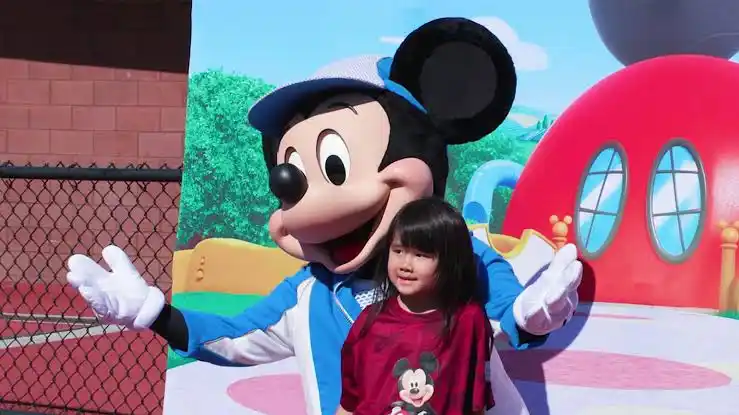
A day of youth sports became even more memorable for families in Fresno when Disney brought a little extra magic to the Let’s Play Sport Clinic. More than 70 children gathered at Valley Children’s Stadium to participate in activities designed to introduce them to the fundamentals of soccer, t-ball, and flag football, while a special appearance by Mickey Mouse added excitement to the experience.
The event was part of an initiative designed to encourage children to get active and discover the joy of sports. Organized through a partnership involving ESPN Take Back Sports, Disney Junior Let’s Play, ABC30 VoluntEARS, Disney, Big Brothers Big Sisters of Central California, Fresno State, and High Performance Academy, the clinic combined physical activity with entertainment and community involvement.
For the children who attended, the experience was about much more than learning how to kick, throw, catch, or run. It was an opportunity to make friends, develop confidence, try different sports, and create positive memories around physical activity.
The involvement of Disney helped transform an ordinary sports clinic into a special event. With Mickey Mouse making an appearance and children receiving Mickey Clubhouse-themed giveaways, the morning demonstrated how entertainment can be used to make fitness and sports more appealing to young audiences.
Disney Brings Magic to Youth Sports
When children hear the word “sports,” they may imagine competition, rules, practices, or organized teams. But the Fresno clinic approached athletics from a more playful perspective.
The appearance of Mickey Mouse gave the event a familiar and exciting element that immediately connected with younger children. According to ABC30, Mickey joined the children at the clinic, while participants also received Mickey Clubhouse-themed giveaways before heading home.
For young children, experiences like this can make a significant difference.
A child who may feel nervous about trying a new sport might be more willing to participate when the environment feels fun and welcoming. Instead of worrying about whether they are good at soccer or baseball, children can focus on enjoying themselves and discovering what they like.
This is an important approach to introducing children to physical activity. Fitness does not always have to be presented as structured exercise. For young people, movement is often most effective when it feels like play.
More Than 70 Children Join the Fresno Clinic
More than 70 children participated in the Fresno sports clinic, creating an environment where young athletes could learn alongside their peers.
The children were introduced to three different sports: soccer, t-ball, and flag football. Each activity offered its own set of skills and challenges.
Soccer encourages children to run, kick, change direction, and develop coordination. T-ball introduces basic baseball skills such as hitting, throwing, and catching. Flag football can encourage running, agility, communication, and teamwork.
Offering several sports during one event also allows children to discover activities they might not otherwise try.
One child may immediately connect with soccer, while another might enjoy hitting a baseball or running a football route. Giving children different options can help them find forms of movement that they genuinely enjoy.
That enjoyment is important because children who associate physical activity with positive experiences may be more likely to stay active as they grow.
Why Fun Matters in Children’s Fitness
Getting children to exercise can sometimes be challenging in a world filled with screens, games, social media, and other sedentary activities.
However, children do not necessarily need to think about physical activity as “exercise.”
They need opportunities to move.
Running around a soccer field, throwing a ball, practicing a new skill, or playing with teammates can provide physical activity while still feeling like fun.
The Fresno clinic is a good example of how organizations can make movement more appealing by combining sports with entertainment and community.
Instead of telling children that they need to exercise, the event gave them something they wanted to participate in.
That distinction can make physical activity feel more natural.
Building Confidence Through Sports
Youth sports can also play an important role in building confidence.
For a young child, successfully kicking a ball toward a goal, catching a pass, hitting a ball, or completing a drill can feel like a major accomplishment.
These small victories can encourage children to keep trying.
Sports also provide opportunities to experience mistakes in a supportive environment. A child may miss a ball or make the wrong move, but they can try again during the next play.
That process teaches an important lesson: improvement comes from practice.
High Performance Academy’s Jesus Garcia highlighted the broader benefits of sports during the Fresno event, explaining that athletics can help create community, empower young people, and develop confidence and perseverance.
Those skills can extend beyond the playing field.
A child who learns how to keep trying after a mistake may eventually apply that mindset to school, hobbies, friendships, and other challenges.
Teamwork Is One of Sports’ Biggest Lessons
Sports can teach children how to work with other people.
Soccer requires players to communicate and move together. Flag football depends on teammates understanding their roles. Even t-ball can introduce young children to concepts such as taking turns, encouraging teammates, and following instructions.
These experiences can help children understand that success is not always about individual performance.
Sometimes, the best result comes from working together.
Learning teamwork at a young age can also help children develop social confidence. They learn how to communicate, listen, cooperate, and respond to different personalities.
A sports clinic therefore becomes more than a physical activity program. It can become a social learning environment.
Community Partnerships Make Youth Programs Stronger
The Fresno clinic was made possible through a collaboration among multiple organizations.
Disney and ABC30 VoluntEARS participated alongside Big Brothers Big Sisters of Central California, Fresno State, High Performance Academy, ESPN Take Back Sports, and Disney Junior Let’s Play.
Community partnerships can be particularly valuable for youth programs because different organizations can contribute different resources.
Coaches provide sports knowledge and instruction. Universities can provide facilities and volunteers. Community organizations can connect programs with families. Entertainment companies can help make events more engaging for children.
When those resources come together, children can receive an experience that combines education, recreation, and community support.
The Fresno event demonstrates how collaboration can create opportunities for young people that may not be possible through one organization alone.
Disney’s Role Goes Beyond Entertainment
Disney is best known for its movies, television programs, theme parks, and iconic characters. But its involvement in community initiatives can also bring entertainment into experiences designed to support families and children.
At the Fresno clinic, Mickey Mouse was more than a recognizable character.
His presence helped create excitement around an activity that encouraged children to move.
For young children, seeing a beloved character in person can turn a regular sports activity into a memorable event. That emotional connection may make the experience more meaningful.
The Disney element also demonstrates how children’s entertainment and wellness can overlap.
When healthy activities are presented in a way that feels enjoyable and exciting, children may be more interested in participating.
Parents Can Help Keep the Momentum Going
A successful sports clinic does not have to end when children leave the field.
Parents can use the experience as a starting point for encouraging physical activity at home.
That might mean playing catch in the yard, taking a family walk, visiting a local park, kicking a soccer ball around, riding bicycles, or simply encouraging children to spend more time playing outdoors.
Children often learn by watching the adults around them.
When parents demonstrate enthusiasm for movement and outdoor activities, children may be more likely to see an active lifestyle as normal.
Physical activity does not have to be complicated. The most important factor is finding activities that children enjoy enough to want to do again.
The Benefits of Trying Different Sports
Introducing children to multiple sports can help them develop a variety of physical skills.
Soccer involves running, kicking, balance, and coordination. T-ball involves hand-eye coordination, throwing, catching, and batting. Flag football can involve agility, speed, spatial awareness, and teamwork.
Trying different activities can also help prevent children from becoming bored.
Instead of being expected to specialize in one sport immediately, children can explore different activities and discover where their interests naturally develop.
This approach can make sports more enjoyable while allowing children to build a broader foundation of movement skills.
For young children, exploration can be more important than specialization.
Outdoor Activity and Everyday Wellness
Youth sports are one part of a larger approach to family wellness.
Children benefit from opportunities to move, play, spend time outdoors, socialize, and develop healthy routines.
Parents can support these habits by creating a balanced lifestyle that includes physical activity, nutritious meals, sufficient rest, and good personal care.
Even small routines can make a difference.
A child who spends time outdoors playing sports may also need simple habits to care for their skin, particularly when participating in activities under the sun.
That makes everyday wellness an important companion to an active lifestyle.
Product Feature: Ragers Skincare Collection
Outdoor play and sports can be an enjoyable part of a child’s routine, but families should also remember the importance of everyday skincare and sun protection.
After spending time outside, maintaining a simple skincare routine can help support healthy-looking skin. Parents should choose products appropriate for their children’s age and individual needs and follow appropriate sun-safety practices when children are outdoors.
For readers interested in exploring skincare as part of a broader self-care and wellness routine, the Ragers Skincare Collection offers products that can complement an everyday personal-care routine.
The connection between fitness and wellness goes beyond exercise. Taking care of the body also means paying attention to recovery, rest, hydration, nutrition, and personal care.
For families building healthy routines, these small habits can become part of a larger lifestyle focused on feeling active and well.
Sports Can Teach Perseverance
One of the most valuable lessons children can learn through sports is perseverance.
Not every attempt will be successful.
A child may miss a goal, drop a ball, strike out, or struggle to follow instructions. These moments can be frustrating, but they also provide opportunities to learn how to respond to challenges.
With encouragement, children can learn that mistakes are part of learning.
They can try again.
They can ask for help.
They can practice.
Eventually, they may succeed at something that previously seemed difficult.
That process can build resilience and help children understand that progress rarely happens instantly.
The Importance of Supportive Coaches
Coaches play an important role in shaping children’s experiences with sports.
A supportive coach can help a child feel comfortable even if they have never played the sport before. Encouragement can make a nervous participant more willing to try.
For younger children, coaches should be able to balance instruction with fun.
The goal is not necessarily to create elite athletes at an early age. It is to help children develop a positive relationship with physical activity.
A good coach can teach children about teamwork, patience, communication, responsibility, and perseverance while still allowing them to enjoy the game.
That positive experience can influence whether a child wants to continue participating in sports.
Why Early Positive Experiences Matter
A child’s first experiences with sports can shape their attitude toward physical activity for years.
If the experience is stressful, overly competitive, or focused entirely on performance, a child may decide that sports are not for them.
But if the experience is welcoming, social, and enjoyable, they may become excited about returning.
This is why the Fresno clinic’s combination of sports and entertainment is significant.
The children were not simply being instructed.
They were being introduced to movement through an experience designed to make them smile, participate, and feel included.
Mickey Mouse may have been the most recognizable face at the event, but the lasting impact could come from the children’s discovery that sports can be fun.
Creating Healthy Habits Through Play
Healthy habits do not always begin with strict schedules or structured programs.
For children, they often begin with play.
A game of soccer can become a habit of outdoor activity. A family bike ride can become a weekly tradition. Playing catch can become an opportunity for parents and children to spend time together.
These activities can support physical fitness while also creating stronger family connections.
The goal is not to make every activity feel like a workout.
The goal is to make movement a normal and enjoyable part of everyday life.
The Bigger Message Behind the Fresno Event
The Disney Let’s Play Sport Clinic in Fresno may have lasted only a few hours, but its message is much bigger.
Children need opportunities to move, play, explore, socialize, and develop confidence.
They also need adults and communities that make those opportunities accessible and enjoyable.
The event showed what can happen when sports, entertainment, education, and community organizations work together.
More than 70 children were able to try different sports while enjoying the excitement of a Disney-themed experience. For some participants, it may have been their first introduction to organized sports.
For others, it may have reinforced an existing love of athletics.
Either way, the experience created an opportunity for children to connect physical activity with positive memories.
The Future of Youth Sports
Youth sports continue to evolve as parents, coaches, schools, and community organizations recognize that children’s athletic experiences should support more than physical development.
The future of youth sports is likely to place greater emphasis on enjoyment, accessibility, confidence, mental well-being, teamwork, and lifelong physical activity.
Events like the Fresno clinic fit into that broader approach.
Rather than focusing exclusively on competition, they create opportunities for children to discover what they enjoy.
That can be especially important in a world where children have so many sedentary entertainment options.
The more positive experiences children have with movement, the easier it may become for them to see physical activity as part of their everyday lives.
Final Thoughts
Disney’s involvement in the Let’s Play Sport Clinic in Fresno turned a youth sports event into a memorable experience for more than 70 children.
With soccer, t-ball, and flag football activities, the clinic introduced children to different forms of movement while creating opportunities to learn about teamwork, perseverance, confidence, and community.
Mickey Mouse added an extra layer of excitement, helping demonstrate that physical activity can be fun rather than something children simply have to do.
The event also highlights an important lesson for parents and communities: encouraging children to stay active does not always require complicated solutions.
Sometimes, it starts with giving children a ball, a field, supportive adults, and a reason to smile.
When sports feel welcoming and enjoyable, children are more likely to participate. When participation becomes a positive experience, it can help create habits that last.
And while a single sports clinic cannot define a child’s relationship with fitness, it can provide an important first step.
For families looking to build a lifestyle around activity and wellness, the message is simple. Encourage children to move, let them explore different activities, support their efforts, celebrate progress, and remember that healthy living includes more than exercise. Rest, nutrition, hydration, personal care, and everyday wellness all play a role.
In Fresno, Disney helped make that message memorable by adding something children already understand naturally: fun.